In 2026, the Cemetery Committee undertook a landscaping project.
The use of concrete covers on graves dates back to the times when there was concern about grave robbing and/or animals foraging for food. Although both problems no longer pose a threat, it still remained fashionable through most of the of the twentieth century to use concrete as a grave covering.
It is now known that concrete is toxic to make, releases carbon dioxide into the environment as it breaks down, and contaminates the soil. As a result, the Cemetery Committee decided not to replace or add any cement grave coverings.
Two of the family plots had a concrete cover which needed to be removed to install a new gravestone. Cracked and broken concrete was posing a safety risk on two other graves. A fifth grave was covered by loose and sunken tiles.
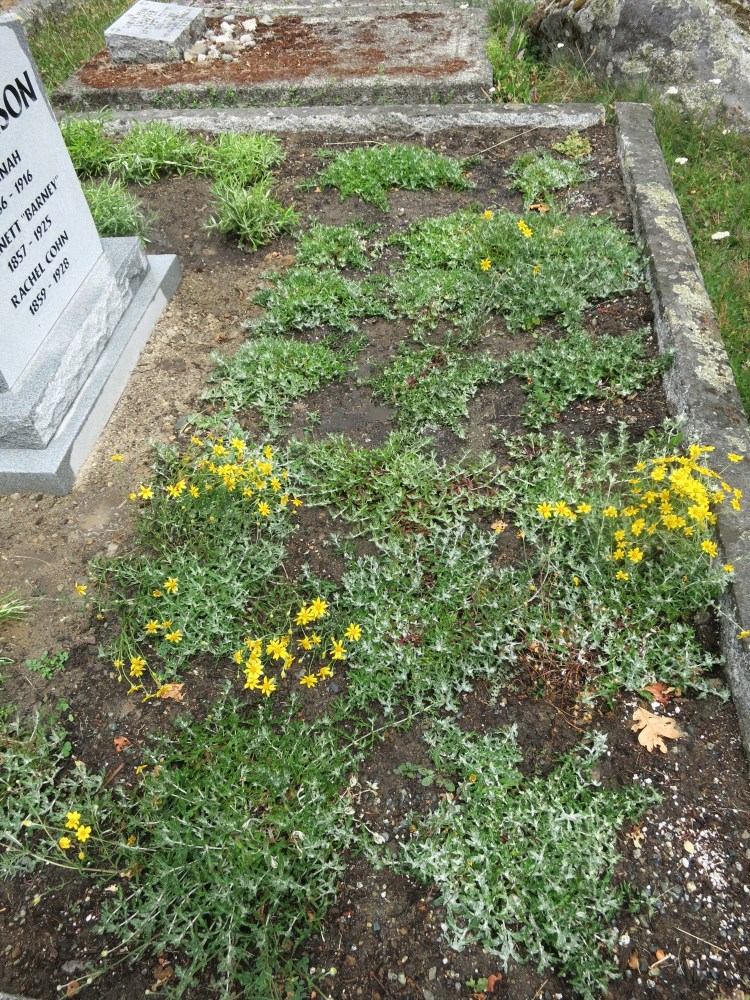
With so many graves needing attention at once, landscaping these plots became a spring project. Following the advice of native plant specialists, and in consultation with Satin Flower Nurseries, low-growing, drought-resistant, native species of plants that are attractive to pollinators, but not to deer, were selected and planted by Carl Hughes of Meadowlark Memorials.
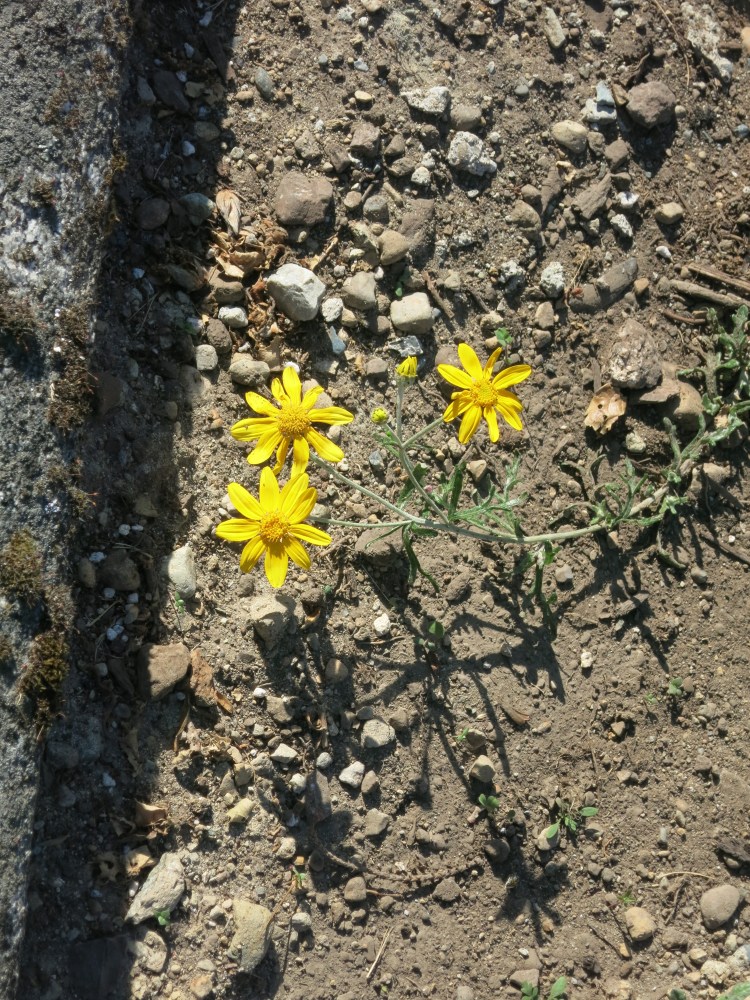
Pearly Everlasting and Woolly Sunflowers were planted on all five grave-sites. The large Oppenheimer family plot served as a canvas to showcase the idea of using native plants. Woolly Sunflowers are featured. Field Chickweed was planted in the corners with a wood chip barrier. This protects the delicate Field Chickweed from Pearly Everlasting and Woolly Sunflowers which grow more vigorously.
Using a small variety of plants was done intentionally as pollinators seem to prefer to find a patch of something they like rather than having to travel distances for food.
Once the plants are established, they will require little maintenance. The concept of using a cemetery as a site for restoring a more natural habitat has been pioneered in other countries, but in 2026, it is unique among cemeteries in the Greater Victoria area.
- Landscaping the Oppenheimer Family PlotThe Oppenheimer family plot is one of the largest in the cemetery. It holds the graves of Godfrey, his daughters Sarah and Harriet. His son Sol and his wife Florence are also buried in the family plot. The obelisk wasContinue reading “Landscaping the Oppenheimer Family Plot”
- Landscaping the Charles A. Freedman PlotCharles A. Freedman‘s grave had once been tiled. It sunk as a result of having someone stand on it. His grave was part of the Spring/Summer 2026 landscaping project. Charles Freedman’s plot before landscaping. Landscaped April, 2026 May, 2026 June,Continue reading “Landscaping the Charles A. Freedman Plot”
- Landscaping the Aaronson Family PlotThere are two family plots for the Aaronson’s. There is a triple wide plot which had originally held the Woodman of the World marker. The marker was inscribed for A.A. and his wife Rose, and should have been placed onContinue reading “Landscaping the Aaronson Family Plot”
- Landscaping the Lewis Family PlotThe Lewis family plot has been monitored by the Cemetery Committee. The first project on this plot was to straighten the monument for Philip Lewis. That project took place on January 30, 2025 by Carl Hughes and his team fromContinue reading “Landscaping the Lewis Family Plot”
- Landscaping Maurice “Moss” Platnauer’s PlotThe plot of Maurice “Moss” Platnauer had fallen into disrepair. The concrete was cracked and the monument was leaning. On February 22, 2026 Tony Leiman and Rick Kool were able to clear the concrete and fill the grave. Before workContinue reading “Landscaping Maurice “Moss” Platnauer’s Plot”
 The Jewish Cemetery of Victoria, British Columbia