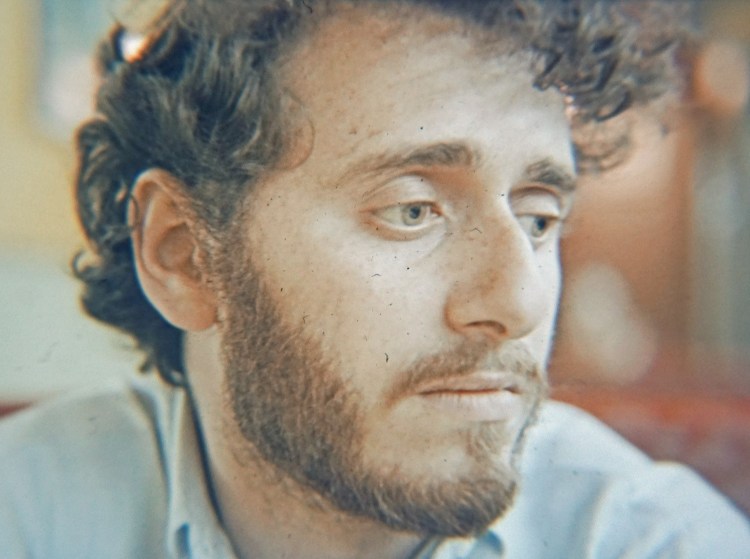
Jean Pierre Adalbert Schachter
Born: April 9, 1941 in Marseille, France
Died: May 8, 2025 in Victoria, B.C.
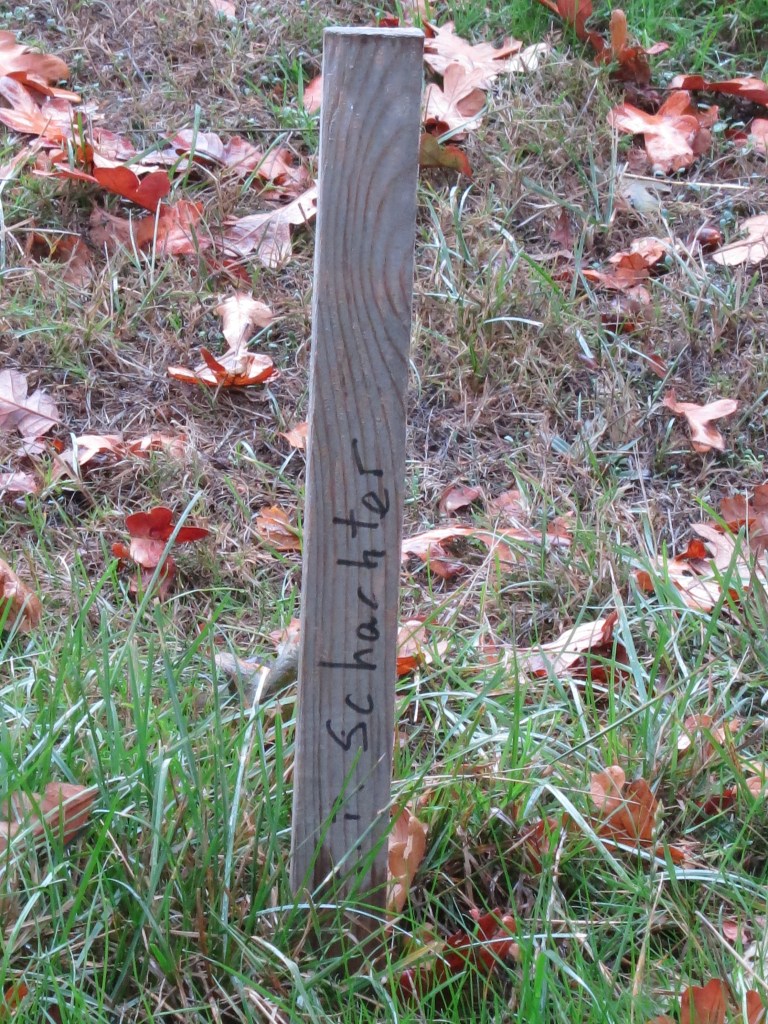
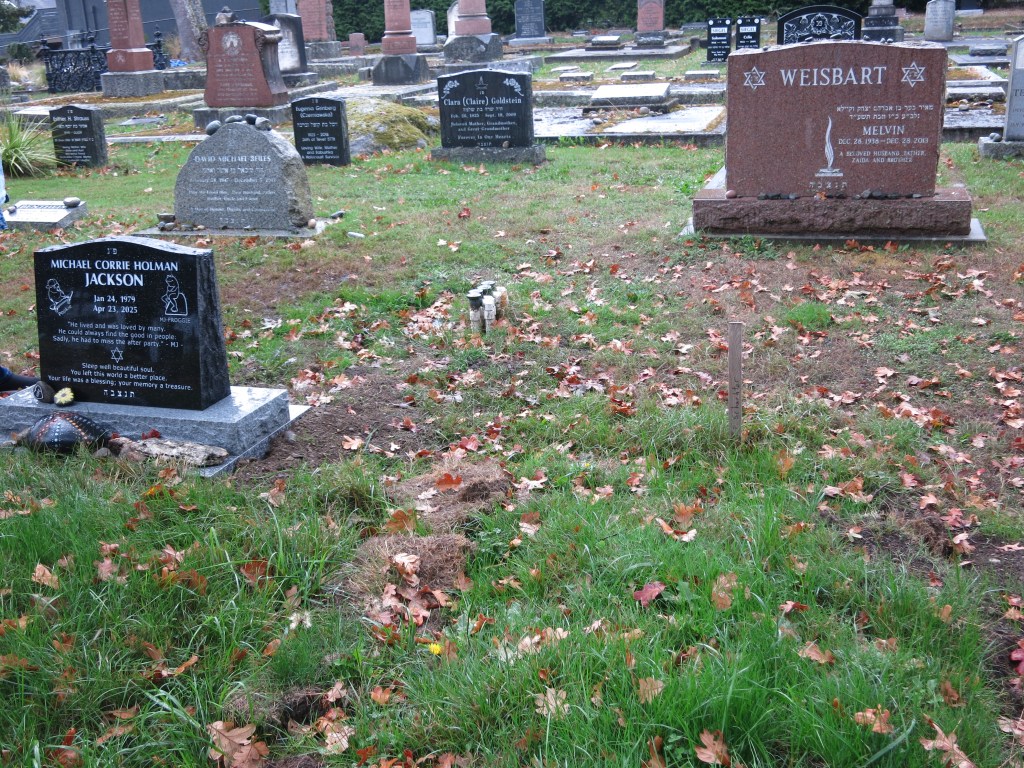
Plot: Row J – Plot 13
Biography:
The following obituary was published on Arbor Memorial
Survivor, Philosopher, Friend, Husband, Father…
Jean-Pierre – JP to his friends – entered into a world unravelling. He arrived on April 9, 1941 in war-time Marseille, as Europe trembled from war and tyranny.
His parents, Benno and Philippine (“Filli”) were Viennese Jews fleeing the Nazis.
The hospital insisted on a French name, but at home he was Pater– the German diminutive of Peter. It was a moniker that defied the bureaucratic pettiness and cast a backward glance to a homeland that had forsaken them.
To set the scene, in 1938, Benno had been arrested in Vienna and was fortunate to survive the more than six months incarceration at the Dachau and Buchenwald concentration camps. Luck intervened wit his timely liberation ahead of the German declaration of war in late 1939. Benno, Filli and JP’s older sister Marianne, seized the moment to embark on a desperate escape from Austria through Italy into France. Upon arrival, Benno was detained again alongside fellow ‘enemy alien’ refugees in an old brick factory called, Les Miles. Providence guided his release a second time just before the German-French armistice of 1940, which marked the start of deportations under the Vichy regime to the Auschwitz extermination site. With Benno’s freedom restored perhaps he perceived a fragile hope; JP was conceived soon after.
But safety remained elusive. With infant JP and six year-old Marianne, the family hid under false papers in Marseille’s Arab quarter. When a sympathetic gendarme warned Benno of an impending roundup, he acted swiftly, guiding his family into Switzerland with help from the American Quaker organization. This was an insanely dangerous trip through mountain terrain. Enroute they made the agonizing choice to leave Marianne behind in a French convent– Benno later bravely returned to occupied France to retrieve her. In 1942, soon after their arrival in Switzerland, Filli became septic after a terminated pregnancy. She then fought to regain her physical and mental health for the next two years, leaving toddler JP without maternal nurturing, boarded out, at a time when he needed her most. As if those calamities were not enough, Marianne developed a mysterious illness, which was treated ni Switzerland with toxic radiation therapy.
By 1948, the nuclear Schachter family boarded the Holland America steamliner SS Veendam bound for a new life in New York. JP arrived in his best Swiss knickerbockers, blissfully unaware that his Old World fashion would be out of place in America. One year fter their arrival in America, they suffered the tragic loss of Marianne, who aged 14 had succumbed to lupus. JP was 8 years old when this fresh layer of grief settled over the family.
Benno nd Filli opened a small jewellery shop in the Bronx, working from morning until night to make ends meet. The constant labour consumed their days – and perhaps also served to muffle the echoes of their past. JP, meanwhile, was too often left to his own devices. One telling moment came when, at age 12, he asked his parents if he could attend church with a friend. His father replied curtly in German, “Don’t be ridiculous – you’re Jewish.” It was the first time JP heard this. The traumas of his early life shaped in him a constant vigilance for catastrophe looming around every corner. But those same experiences also instilled him with a powerful instinct to survive – one that enabled him to cope with his inner turmoil through confidence and deep resilience.
In 1955 JP aced the New York City school system’s standardized testing and was admitted to one of the best schools in America, the Bronx High School of Science. This promotion changed his life as he was now amongst the brightest students of the day. There he learned everything from art and poetry to hematopathology and much else; the knowledge, skills and connections he acquired there would nurture him for the next 70 years. Simply put, it was transformative.
When he graduated, he enrolled at The City College of New York where he first met Judith. In time she became his trusted partner, matching his unbreakable loyalty with hers and from then forward they were never to leave each other’s side.
After receiving a PhD in philosophy from Syracuse University, JP and Judith moved to Canada in 1968. What began as a temporary position at Huron College became a decades-long professorship; and Judith, for her part, completed a doctorate in clinical psychology.
JP’s remarkable intellect was paired with natural curiosity, which led him on a lifelong journey through many passions. One of his early fascinations was photography – the elegant mechanics of finely wrought cameras complemented by the alchemy of developing film. In his dim chemical-scented darkroom, science met sorcery and JP was enthralled.
Then, for a time, the skies beckoned. He flirted with aviation, taking flying lessons and imagining life among the clouds – until one mandatory manoeuvre in Cessna brought his stomach to his throat and him abruptly back to Earth, where he decided the ground held enough wonder after all.
Next came the computer age. In 1918, JP hauled home a hulking ‘personal computer’ and obsessively immersed himself in programming languages with obscure eponymous names. He loved programming and relished publishing scholarly articles in computing journals.
Another favourite pastime was fishing. His friend, Tony Wiling was an accomplice in this and commented, “He approached his activity with the same enthusiasm that he took on any other venture. He read widely about fishing equipment, places to fish, kinds of fish and when things did not go well he would explain that he was not out to catch the fish, merely to entertain them.”
As a lecturer, he engaged listeners with apt analogies, enhanced by his distinct Bronx twang, infused with humour and subtlety, making complex philosophical ideas feel accessible. His students loved him. He felt pride, when these protegees went on to succeed, brandishing the critical thinking that his training helped to cultivate. At Huron, he became Dean of Arts for 12 years – it was a role em embraced with a deep responsibility. He administrated with clear-eyed conviction, sometimes combative in meetings, ever intolerant of laziness or incompetence. He wanted to leave things better than he found them. In the end, he did.
In the 1990s, during his deanship, Judith was diagnosed with breast cancer. JP stepped away for a sabbatical to support her – unflinching in his devotion. It was during these months at her side that he began reading his father’s wartime letters. What began with sorting papers, unexpectedly became a determination to reconstruct the shattered tree of his ancestry.
Dramatically, this quest ultimately led to the discovery of a half-brother, Harry (nee Otto) Shaw living in London, UK – a connection that was lot to time, war and his father’s private nature. Years later, when JP and Judith crossed the ocean to meet Harry, the family link that had been severed was boldly restored.
But, what truly mattered to JP were the human connections he habitually sought. He listened. He gave advice – at time blunt, always thoughtful. As Annett Jones, a close family friend recalled, when she was in crisis, JP offered the perfect remedy; a trip to the mall for ice cream. He seemed to believe in its innate therapeutic value – and more importantly, it created an opening for supportive conversation. He was, in essence, a father –first to Theo and Michael, but also to a wider circle of students, friends, colleagues, and his daughters-in-law, with whom he formed deep bonds. One friend, George, put it best; “Most of us, growing up, look for someone to show us how to be an adult. I was lucky enough to meet two men who could. One of whom was you.”
JP also had an ability to sustain friendships across the decades. Tony Wiling, Tom Lennon, Ron Wolf, Al Segal, Bill Clark, George Donaldson – his inner circle – were his brothers. He showed them the same care and loyalty he gave to his family.
Ron Wolf recounted their many walks by the riverbank discussing life and philosophy. In his words, JP believed that ‘the meaning of life can be found in the relationships that are the closest to you. The relationship with your family and close friends, is the critical component to having a life well lived. Years after this discussion, I still think back on Jean Pierre’s amazing views on life and consider it the single best piece of advice for a contented life. In Jean Pierre’s own life, you can see his adherence to this philosophy. He is an amazing friend, father, grandfather, and husband. His fantastic mind always allowed him to lead a life of great interest.’
In his final days, ad death approached with mounting certainty, JP wrestled with the question of how best to approach it. In the end, he found the answer in a poem, while composing a last letter to his friend Tom. He recalled Dylan Thomas’ extortion for “Grave men, near death, who see with blinding… (o) rage, rage against the dying of the light.” JP, ever a connoisseur of fine distinctions, did not wish to rage. He preferred, he said to “meander”.
When his son greeted him with “It’s nice to see you,” JP replied, in a voice frail but a mind still crisp, “It’s nice to be seen.” It was, perhaps, his final quip – dry, precise, and unmistakably his.
Jean-Pierre passed away at the age of 84, his story a luminous counterpoint to the darkness that marked his beginning. He carried that darkness inside, but his light was stronger. He was a man who came into the world with nothing promised – and built a life of wisdom, love, humour, and connection His legacy lives on not only with the students he taught, the family history he meticulously preserved and those still living, but perhaps even more so in all that he touched with the guidance, support and loyal friendship of a father.
Parents:
Phillippine
Benno
Sibling:
Marianne
Harry (nee Otto) Shaw (half-brother)
Spouse: Judith Schachter
Children:
Theo
Michael
 The Jewish Cemetery of Victoria, British Columbia