
Birth: 1898 in Dyea, Alaska
Death: April 24, 1953 in Olmsted County, Minnesota, USA
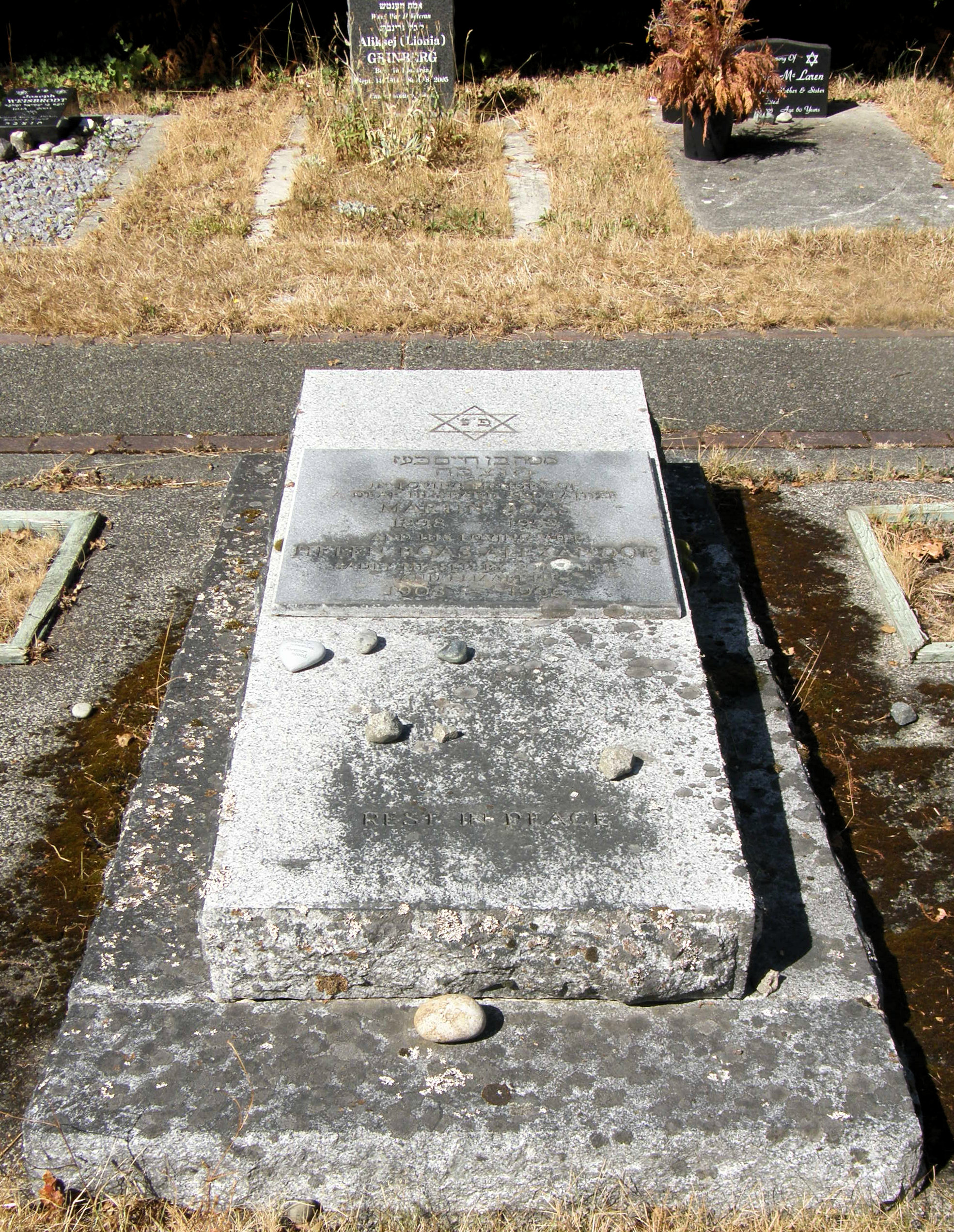
Plot: Row B – Plot 4
Inscription:
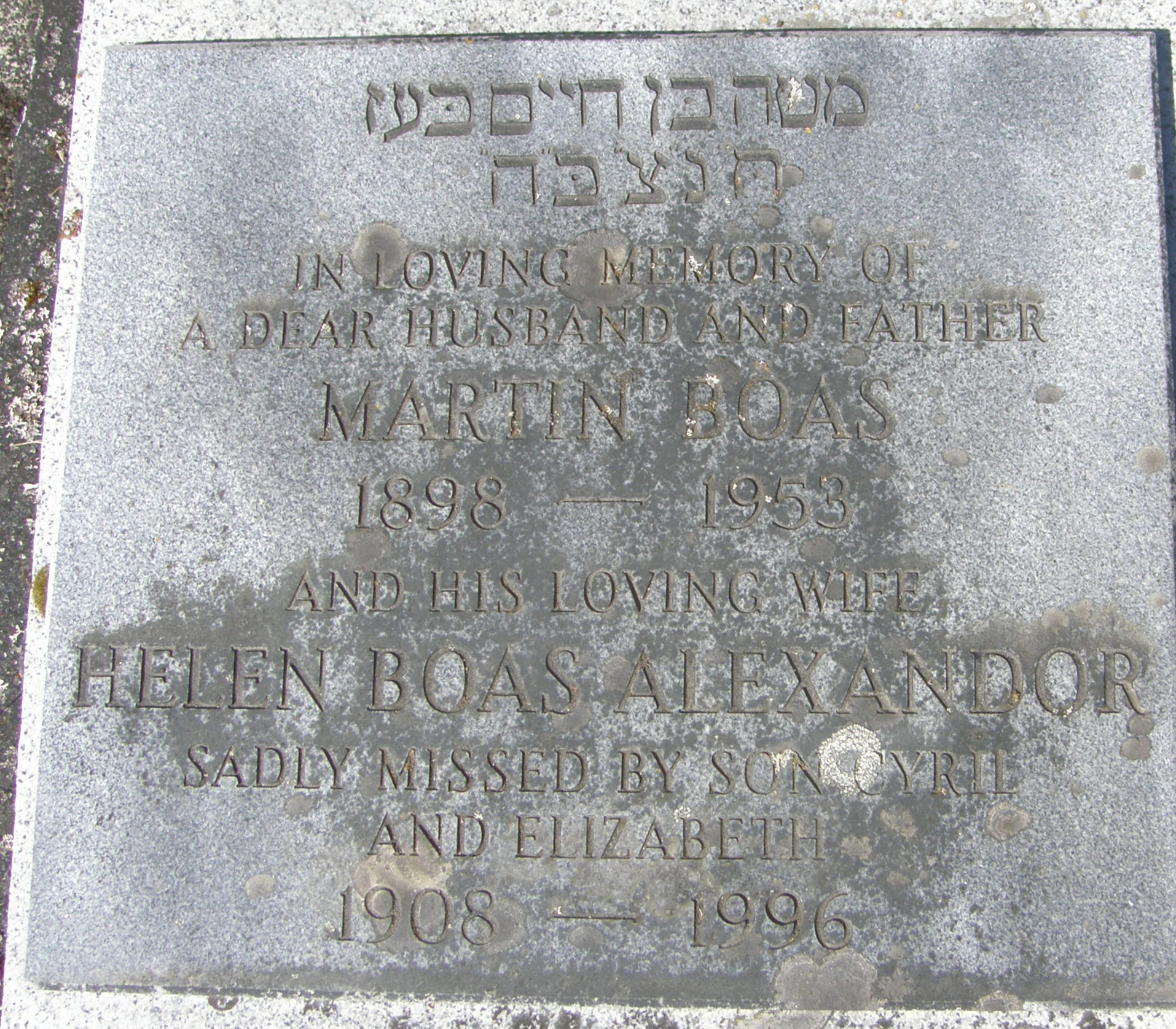
משה בן חיים בעז
ת׳נ׳צ׳ב׳ה
IN LOVING MEMORY OF
A DEAR HUSBAND AND FATHER
MARTIN BOAS
1898 – 1953
AND HIS LOVING WIFE
HELEN BOAS ALEXANDOR
SADLY MISSED BY SON CYRIL
AND ELIZABETH
1908 – 1996
REST IN PEACE
Translation of inscription:
משה בן חיים בעז
(Hebrew: Moshe ben Chaim Boaz)
ת׳נ׳צ׳ב׳ה
(Abbreviation of Hebrew: “May his/her soul be bound with the bond of life.”)
In loving memory of
a dear husband and father
Martin Boas
1898 – 1953
and his loving wife
Helen Boas Alexandor
Sadly missed by son Cyril
and Elizabeth
1908 – 1996
Rest in peace
Biography:
Merchant, husband, father
Henry and Martha Boas and their three children immigrated from Germany to the United States in 1897. They settled in Dyea, Alaska. It was there that Martin was born. Dyea played a part in the Klondike Gold Rush, but by 1898 when the railroad was built and terminated in Skagway, Alaska. Dyea began to lose its population. In 1899, the family moved the 26 miles to Skagway. Martin’s father purchased property and opened the Boas Tailor and Furrier Shop.
In the 1910 U.S. Census, the family was listed as living in Fairbanks, Alaska where they owned several businesses. After a May 1911 fire near their clothing store, the family moved from Alaska and settled in Seattle. By 1920, Martin’s brother, Alfred, had moved out of the house. According to the 1930 U.S. Census, Martin was living with his parents, his siblings Max and Hilda and Hilda’s four year old child Kenny. Hilda and her husband had separated just before Kenny’s birth. Kenny grew up his with his mother, grandparents and uncles. He become a pianist and enjoyed some notary in the Seattle jazz scene.
Martin’s father owned the Emporium Department Store in Seattle. Both Martin and his brother, Max, worked in their father’s business. The 1930 U.S. Census listed Martin’s occupation as a dry goods merchant.
A November 20, 1935 Canadian immigration document recorded that Martin crossed from the U.S. to Canada with $2000, the highest amount of anyone arriving that day. Martin said that his occupation was merchant and that he was in the real estate business with his uncle I.M. Nodek. I.M. lived at 1015 Cook Street, the same address that Martin listed for himself.

This document is part of a mystery surrounding a woman named Helen. A. Helen Seckel’s name appears in the Victoria city directories beginning in 1927. She was listed as living at 1015 Cook Street in Victoria. There is a marriage document which showed that on February 16, 1936 Martin married Helen Seckel at his brother Alfred’s home in Seattle.
According to the Times Colonist on February 19, 1936, Helen Nodek, was given in marriage to Martin Boas by her uncle, Isador M. Nodek at Alfred Boas’ residence in Seattle. There is no listing of Helen Seckel in the Victoria city directories after 1935. The Times Colonist on March 9, 1936 reported that “Mrs. M. Boas, the former Helen Nodek entertained at a post-nuptial tea at the Empress Hotel on Saturday afternoon… The hostess received in her wedding dress of dusty pink.” Tea, which included a three-tiered wedding cake and ice cream was served to the 25 guests in the Elizabeth Room. The centerpiece was a “lovely arrangement of spring flowers.” Whether her name was Seckel or Nodek, by 1936 she was Mrs. Martin Boas.
From 1936-1938 Martin and Helen Boas were listed in the Victoria city directories as living at 1015 Cook Street and as being the proprietors of The Hub Furniture. The Victoria Daily Times reported on September 9, 1936 that the “little” second hand furniture shop at 713 Johnson Street had been “thriving” since Martin bought it nine months earlier. As owner, Martin “took in” four other stores and was planning to make a large showroom for his “better class furniture.” Martin renamed the business “The Hub” and also hired an upholstery and cabinet specialist.
On March 25, 1938 “Helen (nee Nodek)” gave birth to son Cyril.
The Hub Furniture Store was subject to three fires during 1938. The October 11th edition of the Times Colonist reported that at 2 a.m. that day, fire broke out at the rear of the building and quickly spread to the roof. The call was answered within three minutes. Due to the location of the blaze, the fire department used their “new aerial”. The store suffered “considerable” fire and water damage.
There was no listing for either Martin or Helen Boas in the Victoria city directories between 1940-1944. Their names did appear on the Canadian voters list for 1940 which noted that the Boases were living at 1015 Cook Street. Martin’s occupation was listed as merchant.
The Victoria Daily Times reported on November 6, 1945 that Mr. and Mrs. Boas purchased the Marble Estate Building at 713-719 Johnson Street for $24,000. The Hub had been using half of the space in the building for ten years. Martin planned to expand the store to fill the entire building. The Hub was also appointed Vancouver Island’s exclusive agents for St. Clair Ranges and Heaters. On September 5, 1947, the Daily Colonist reported that a building permit was issued to Martin for construction of a house at 715 Johnson Street at an expected cost of $4,000. The Boases didn’t live there.
In 1950, the Boas family moved to 1215 Cook Street. The 1952 Victoria City Directory listed both Martin and Helen as proprietors/pawnbrokers at the Island Trading Co. which was located at 715 Johnson Street.
Martin died in Minnesota in 1953. Helen would later marry A.E. Alexandor. Helen was buried beside Martin, and A.E. was buried beside his first wife, Beatrice.
- This Boas family does not seem to be (closely) related to Franz Uri Boas, considered a pioneer of modern anthropology.
- Martin’s nephew Kenny Boas was a pianist and a fixture in Seattle’s Jackson Street jazz scene during the 1940s-1950s. His musical style included the blues, bebop and Jazz. Kenny broke racial barriers by resigning from the white musician’s union and became the first non-minority member of the Negro Musicians’ Union, Local 493. Kenny played at “Black” clubs and was friends with Ray Charles. For two years, Kenny wrote letters for Ray. Kenny played piano with other legends of the jazz scene including Floyd Standifer, Buddy Catlett, Ernestine Anderson and Quincy Jones.
For more information about Kenny’s life and career:
Seattle crossing guard was a barrier-breaking jazz rebel
Kenneth Martin Boas (1925-2018)
Parents:
Henry Boas (1860-1936)
Martha Levy Boas (1865-1943)
Siblings:
Alfred Boas (1891-1975)
Max Boas (1893-1974)
Hilda Boas (1895-1943)
Spouse:
Helen Seckel or Nodek Boas Alexander (1908-1996)
Children:
Cyril Boas
Additional images:

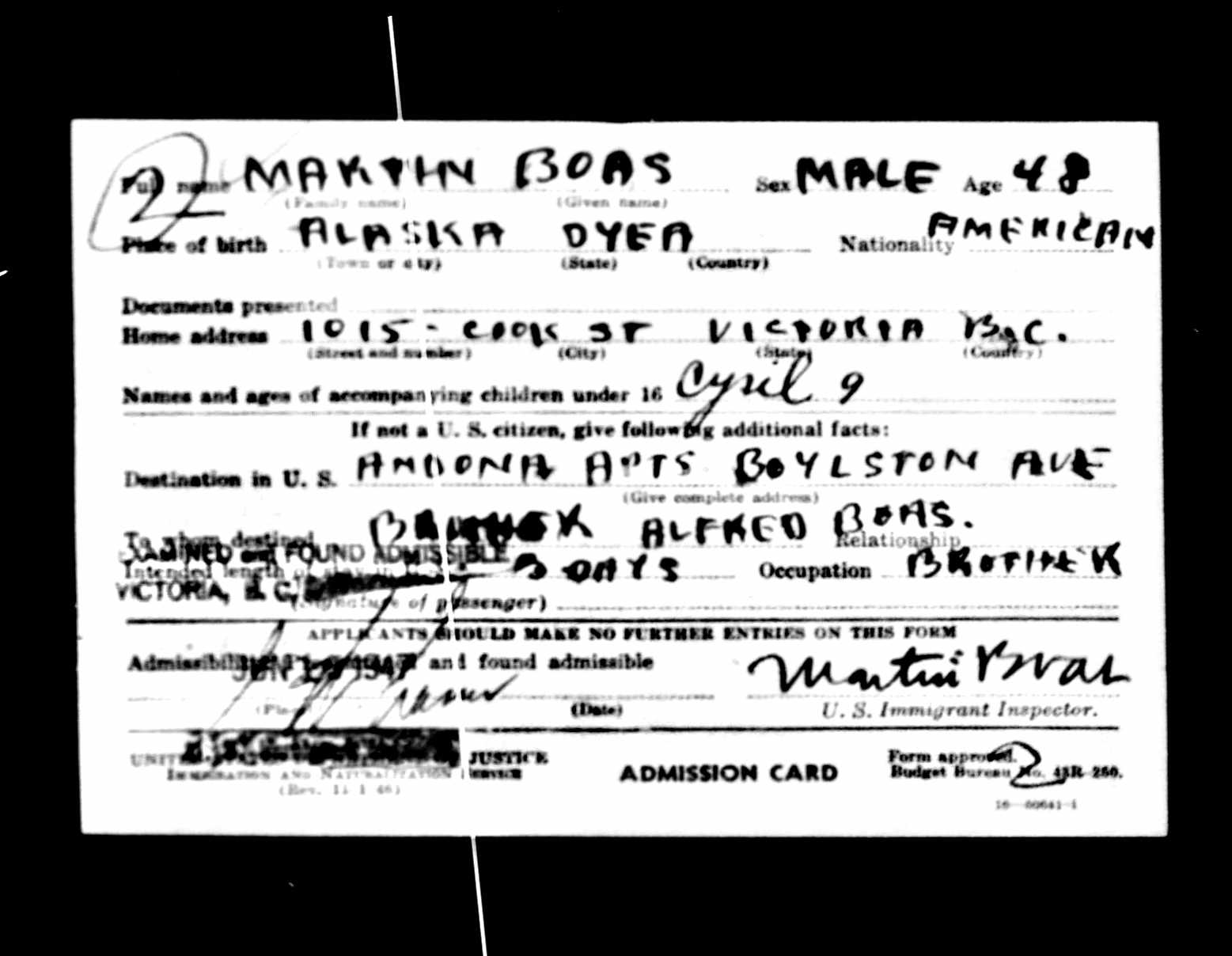
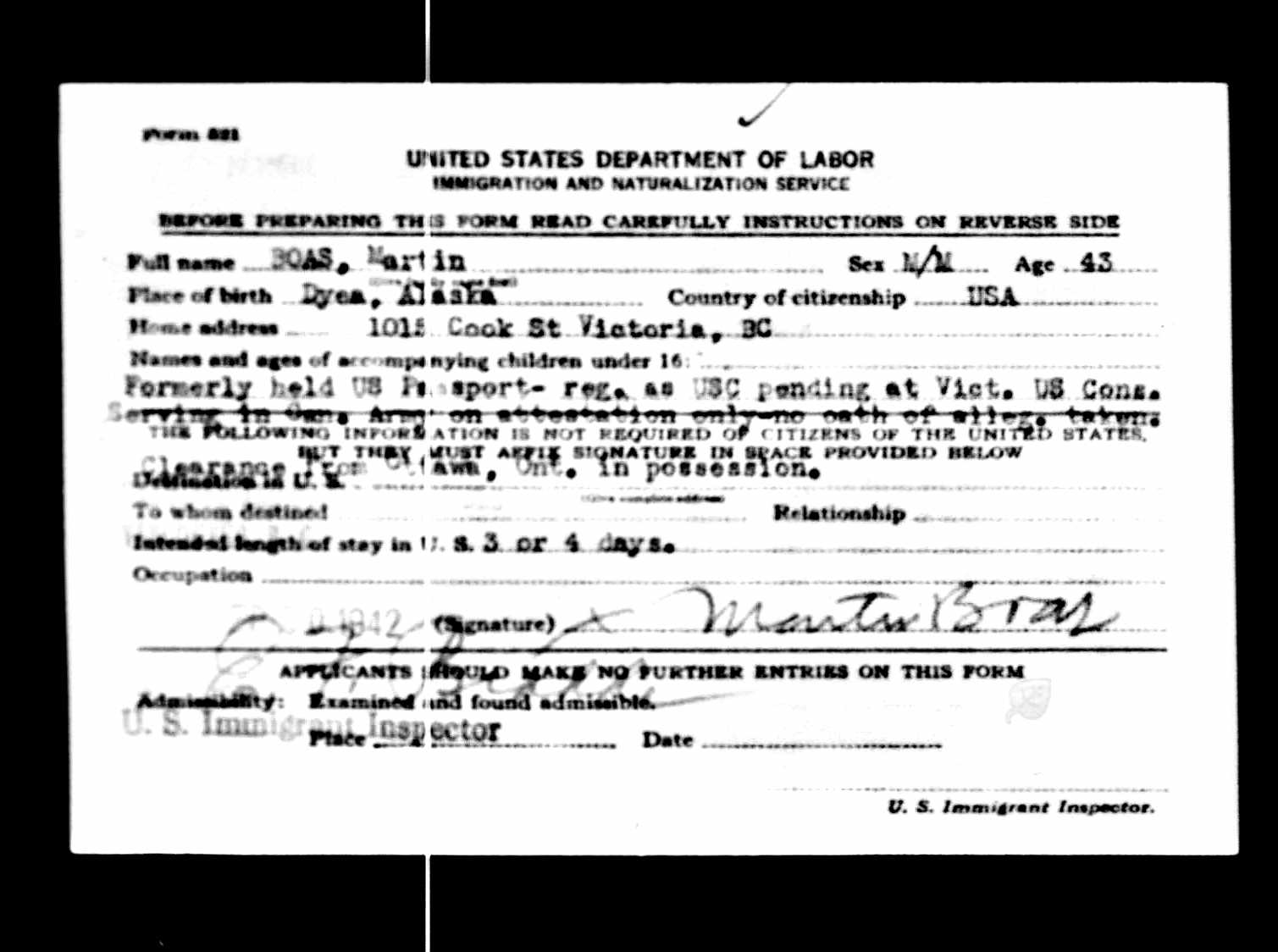

1935 Canada Border Crossings from U.S. to Canada 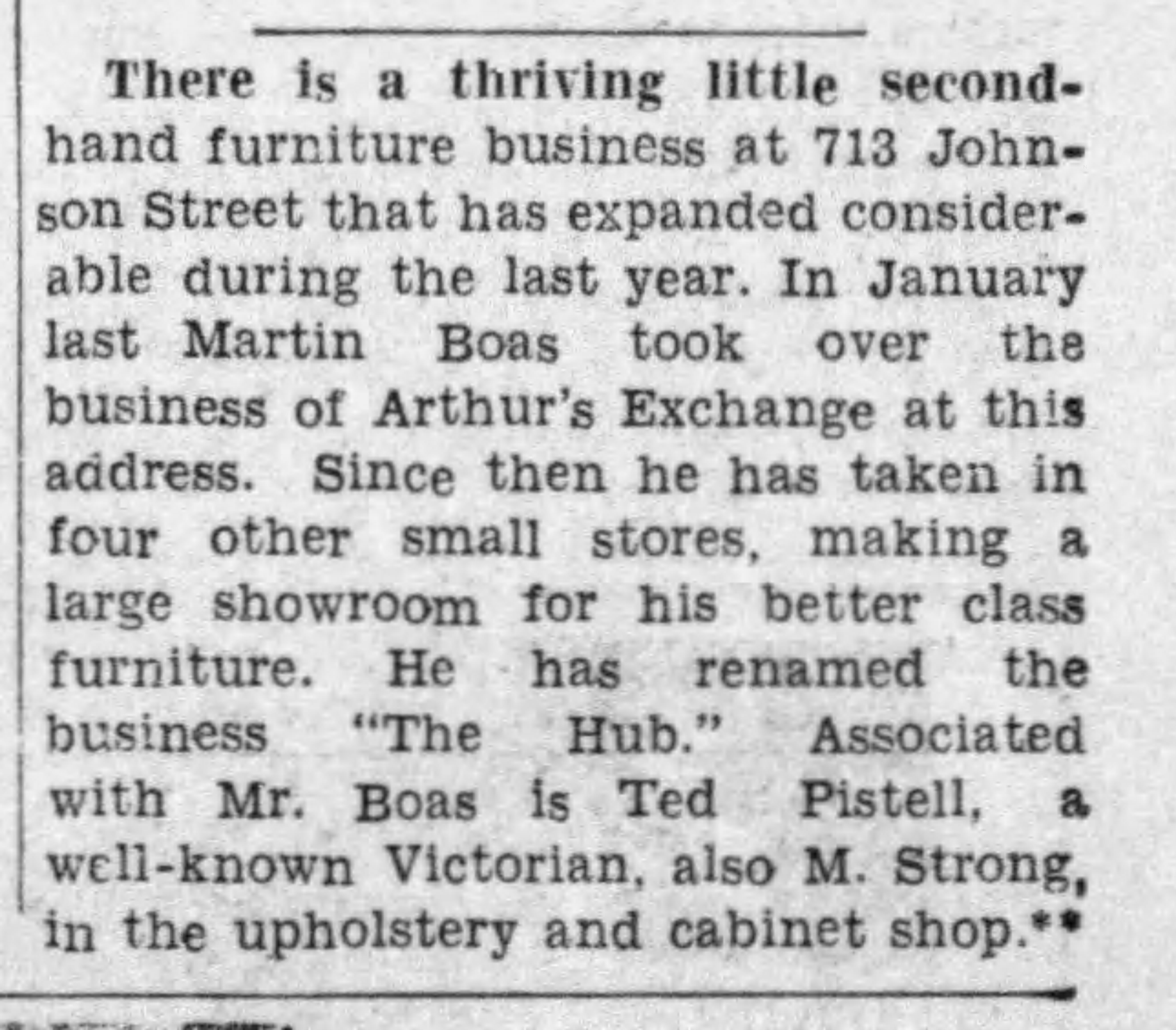
The Victoria Daily Times September 9, 1036 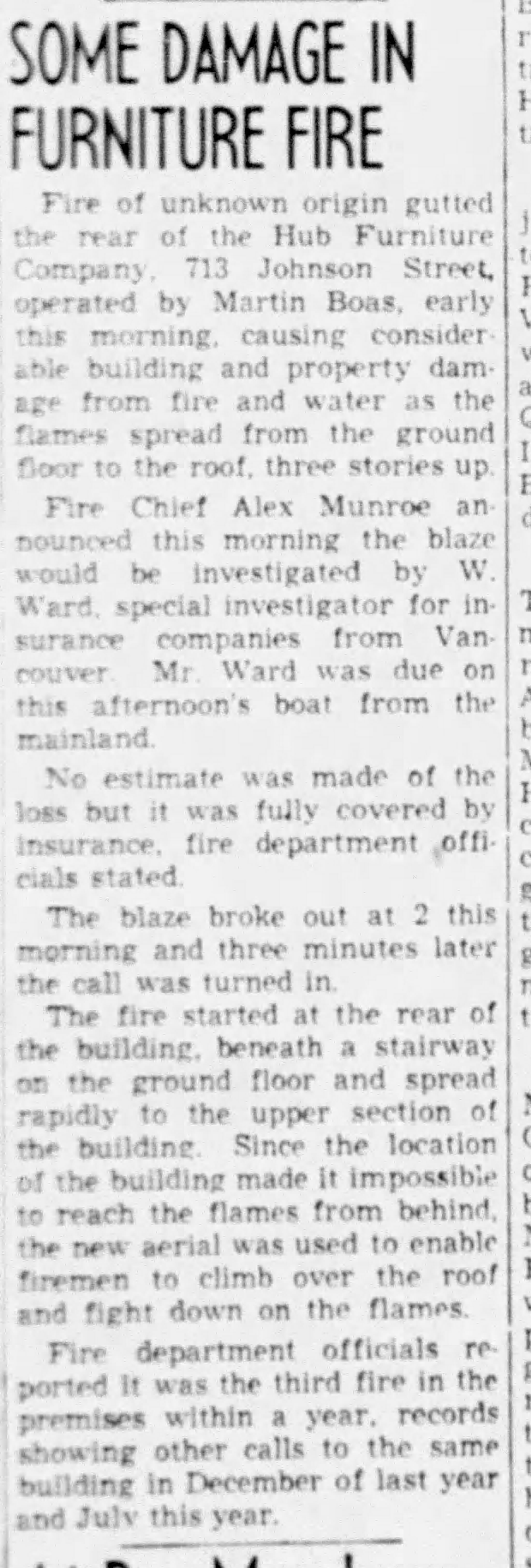
Times Colonist October 11, 1938 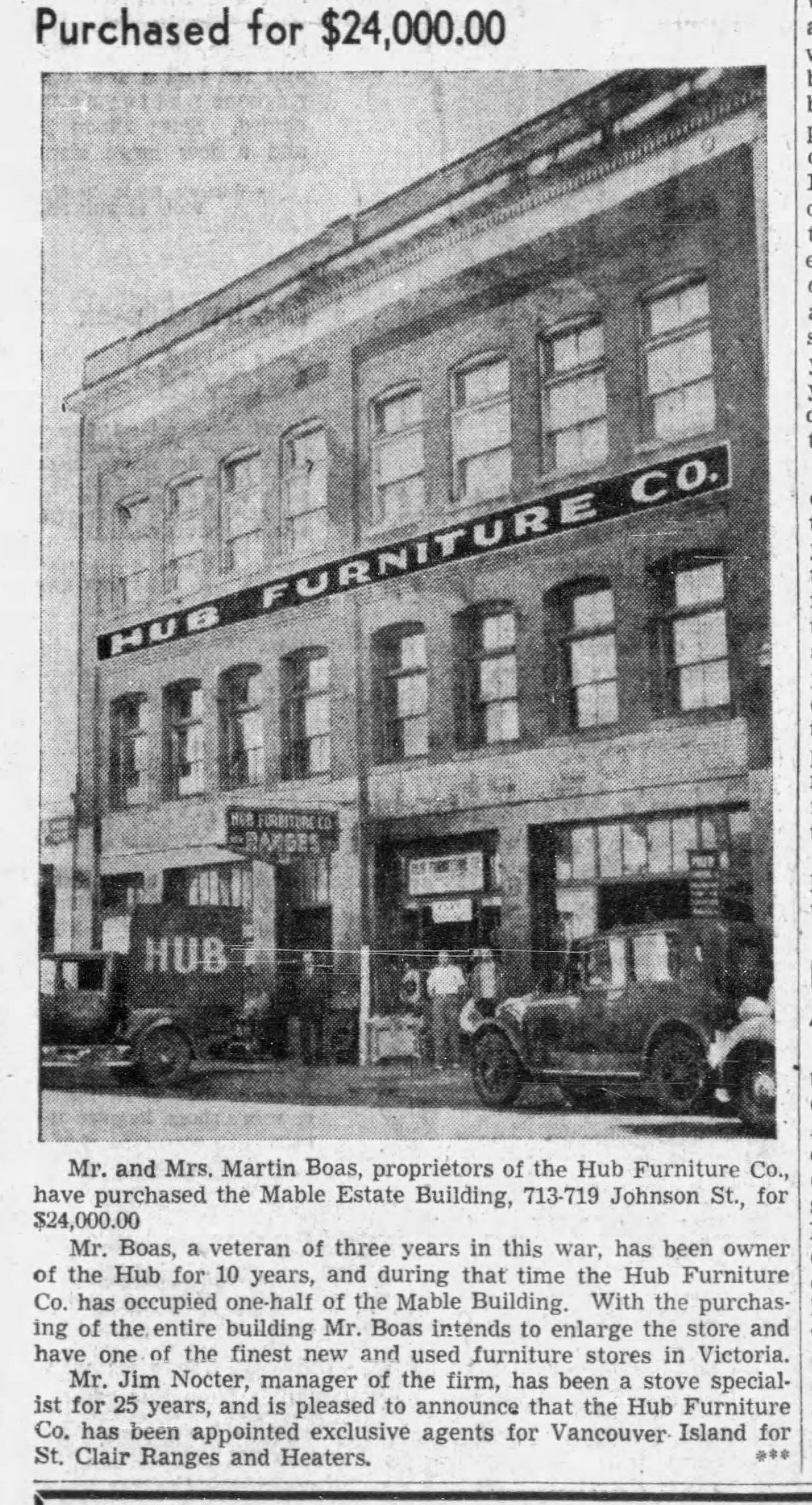
The Victoria Daily Times November 6, 1945 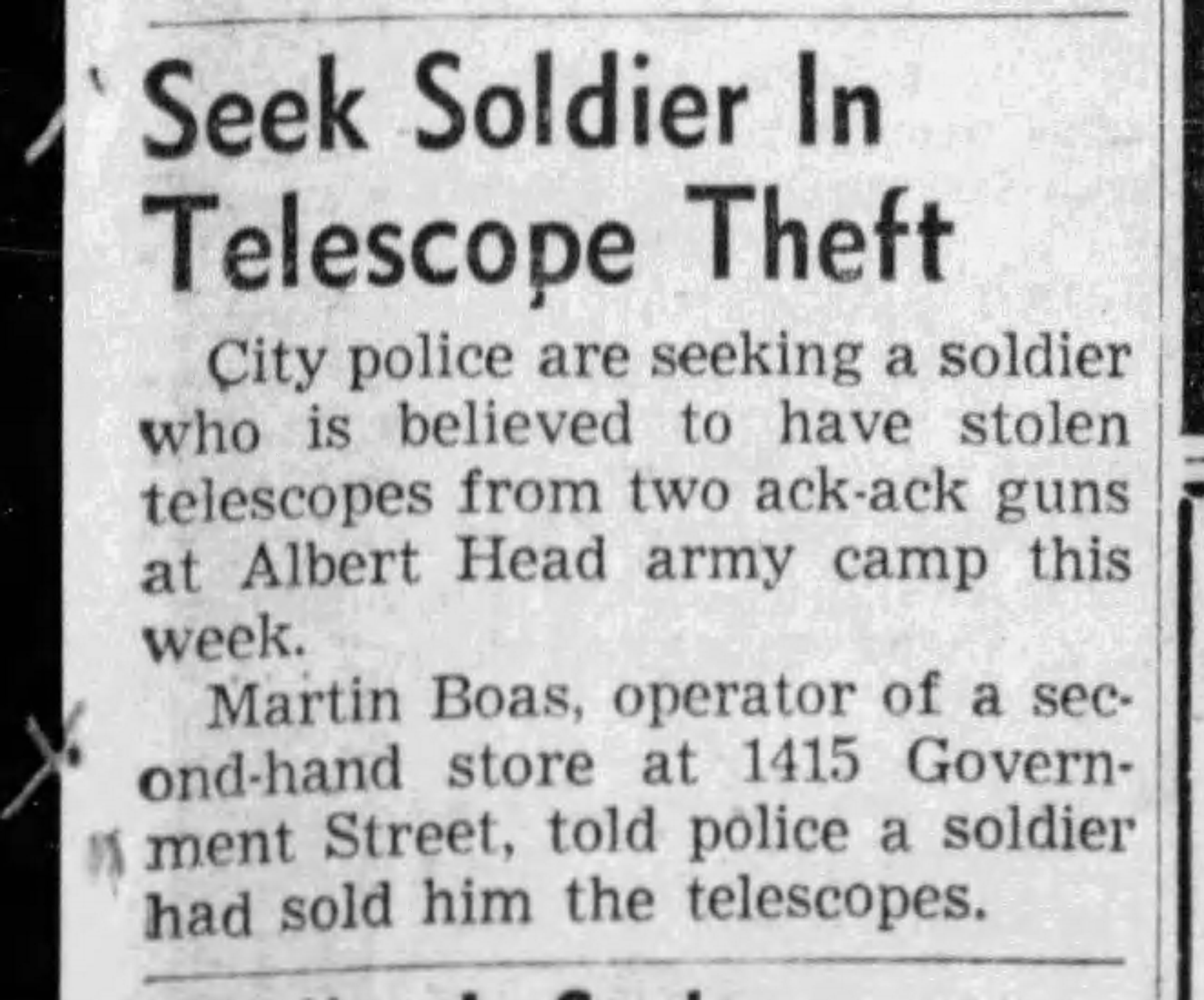
Times Colonist August 24, 1951 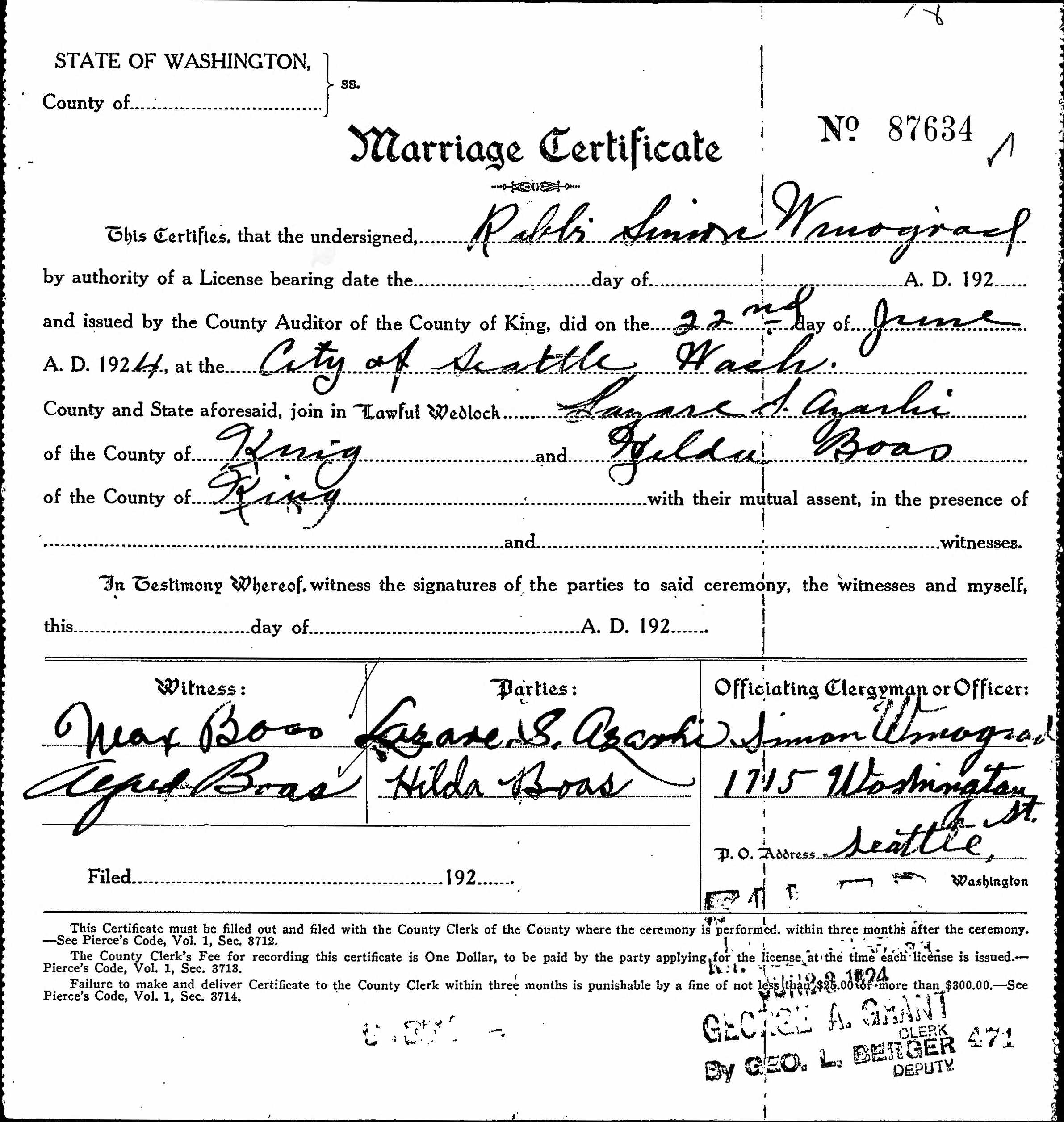
Marriage Certificate for Hilda Boas and Lazare Azarhi 
Times Colonist February 13, 1936 
Times Colonist February 19, 1936 
Times Colonist February 19, 1936 
Times Colonist March 25, 1938 
Times Colonist March 9, 1936 
The Victoria Daily Times September 26, 1936 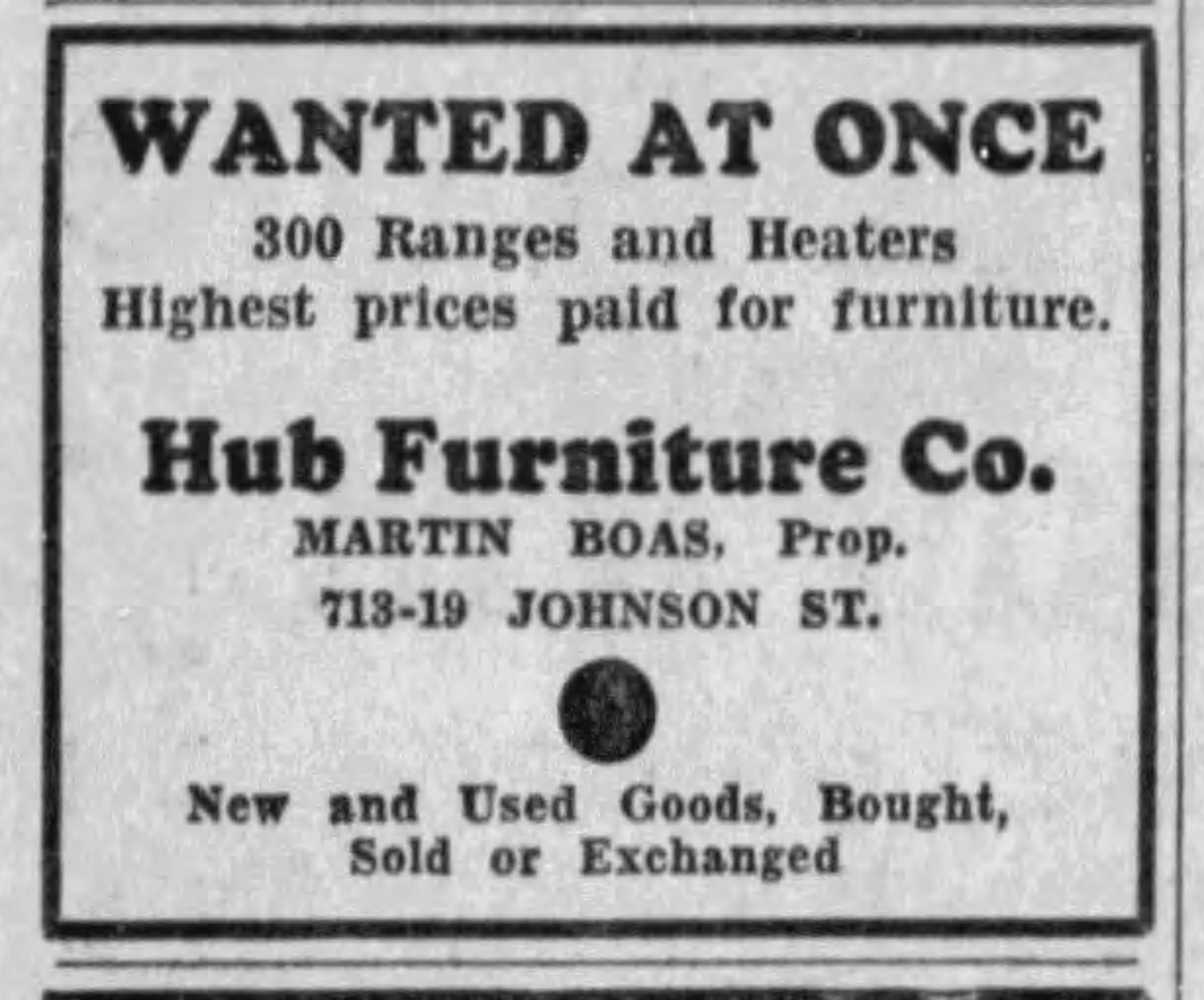
The Times Colonist September 14, 1937 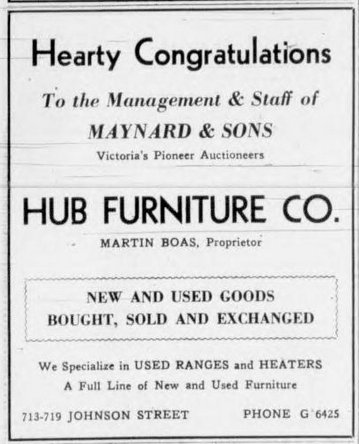
The Daily Colonist Feb 25, 1945 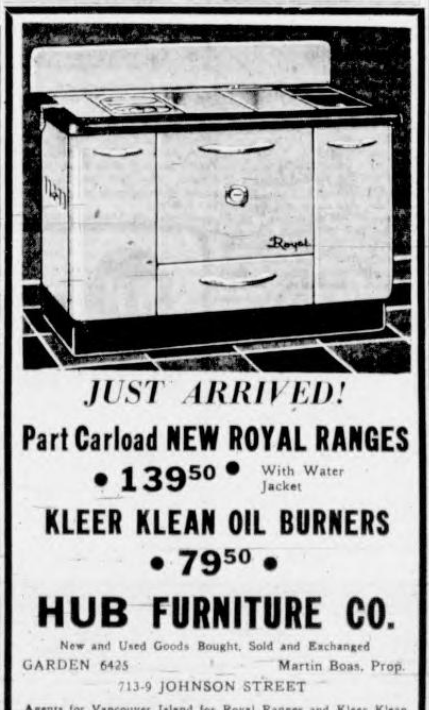
The Daily Colonist March 7, 1947 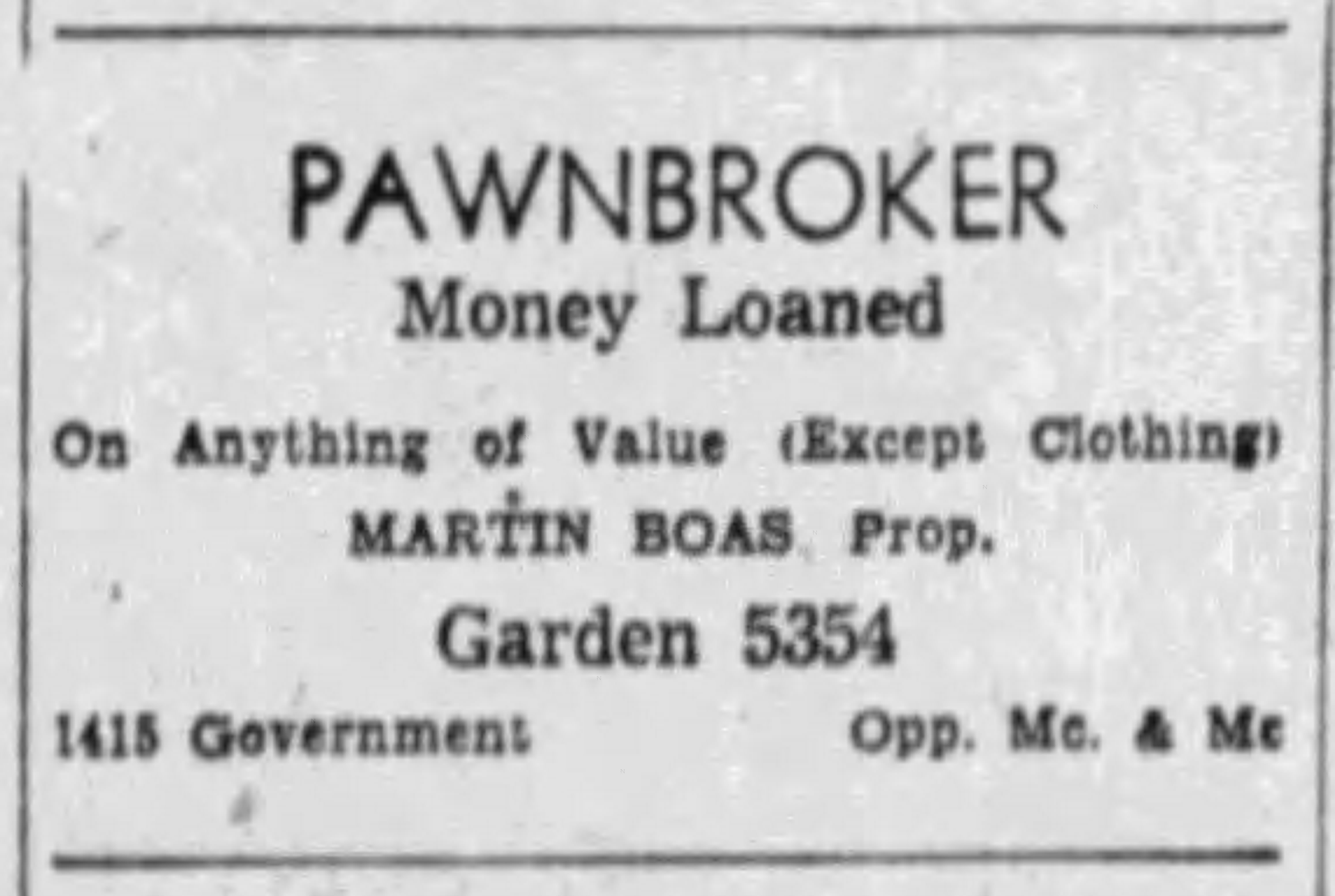
Times Colonist June 26, 1951 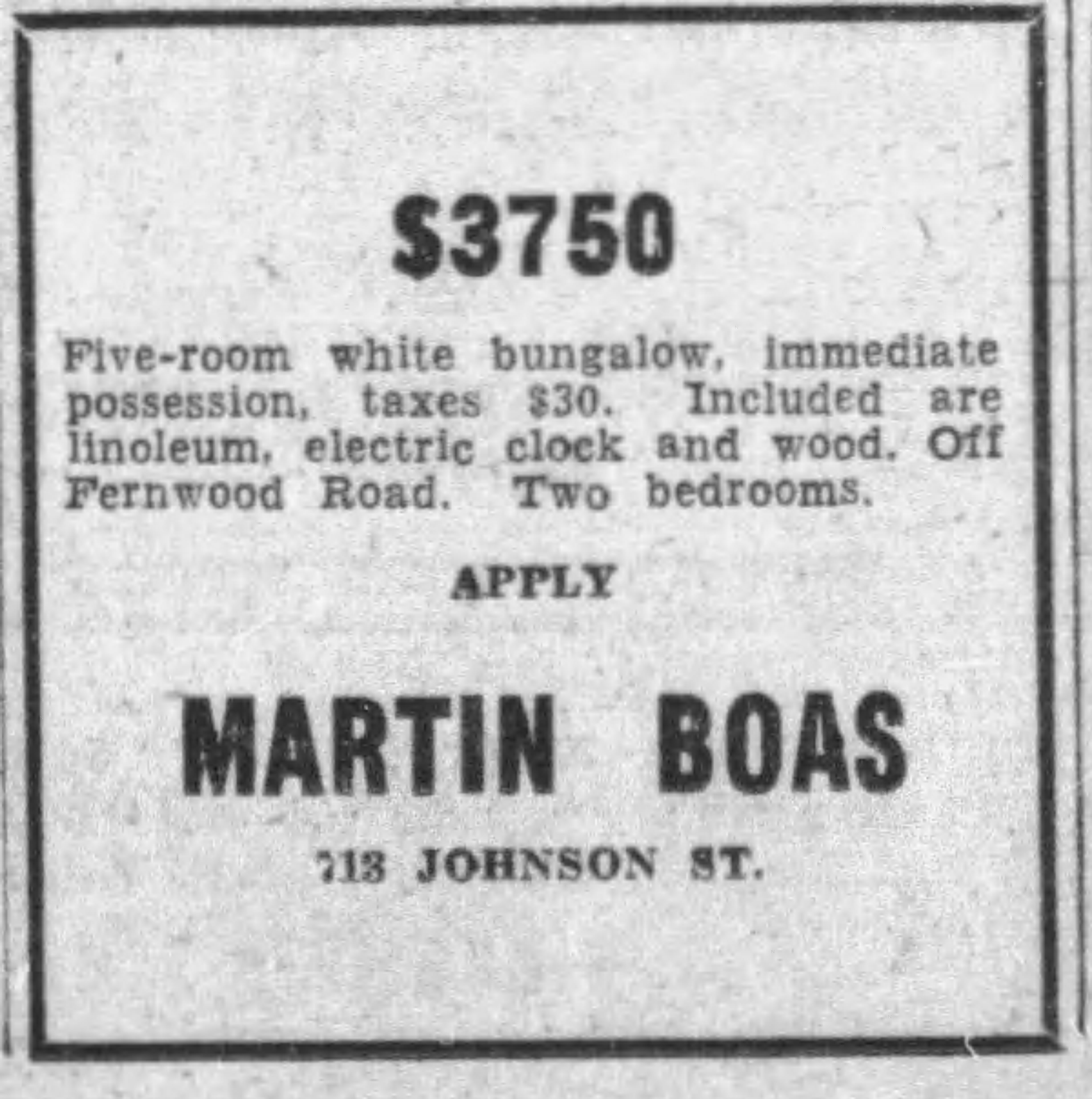
Times Colonist October 16, 1946 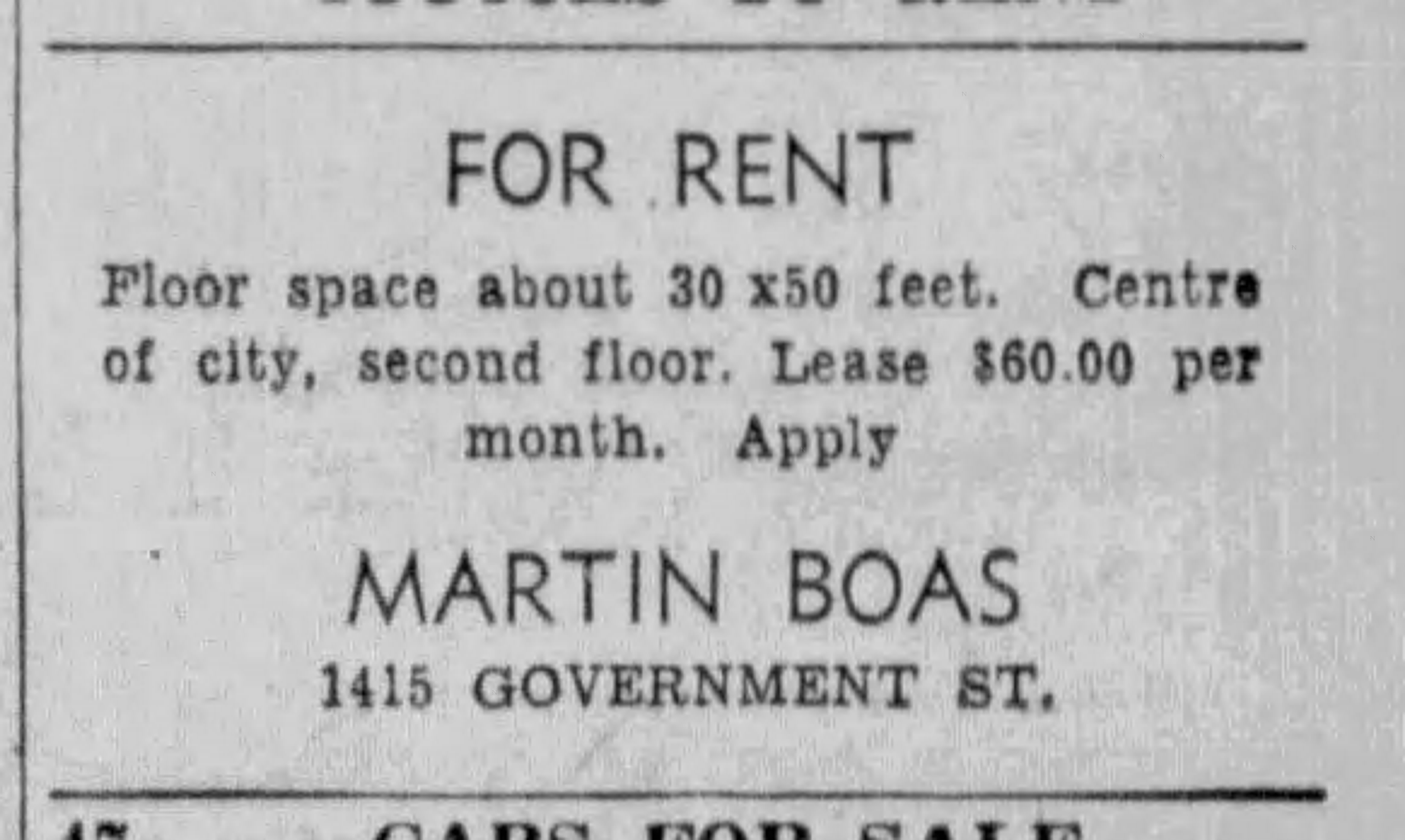
Times Colonist June 18, 1952
 The Jewish Cemetery of Victoria, British Columbia